
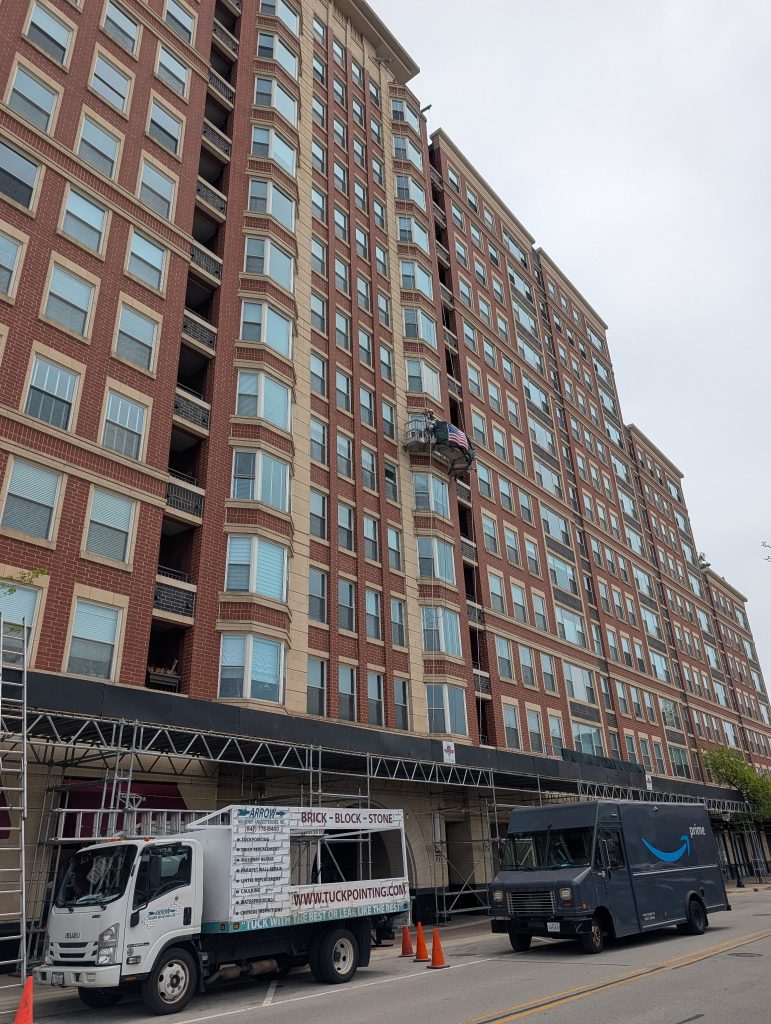
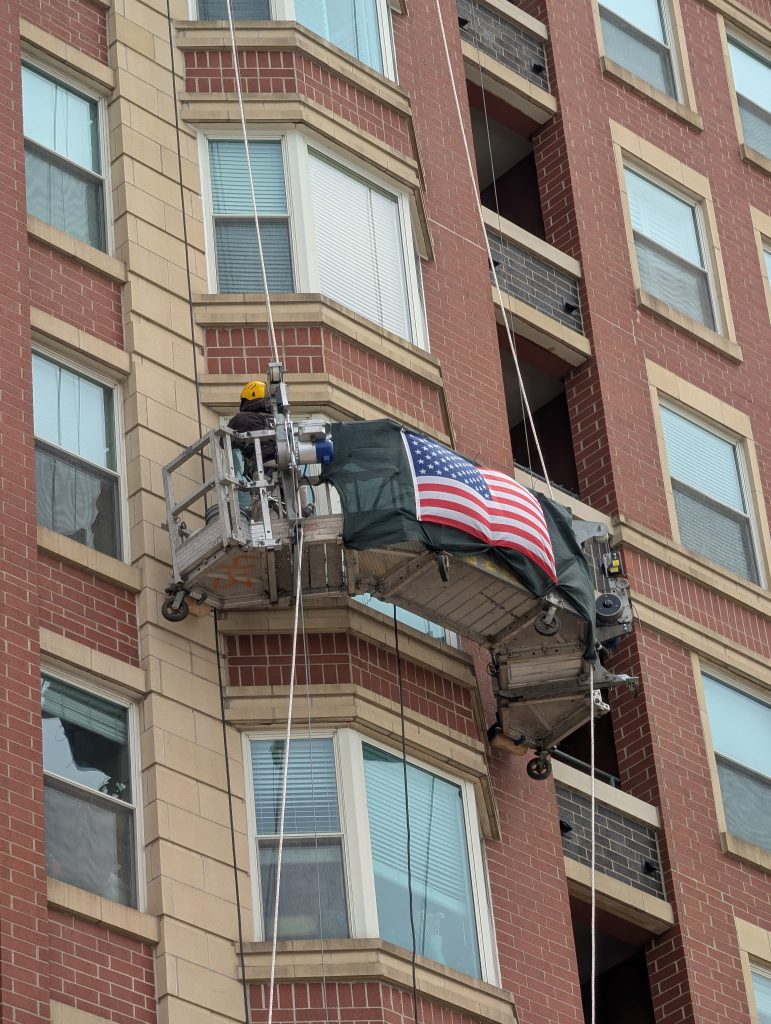
Masonry Restoration & Tuckpointing | Downtown Arlington Heights Condominium
Arrow Masonry & Exteriors is restoring the exterior of a mid-rise condominium association in downtown Arlington Heights, Illinois. We completed the same restoration on this building in 2015. The association brought us back because the original work held up. Repeat business on a job like this says more about the result than any sales pitch could.
Exterior masonry breaks down over time. Weather, UV exposure, freeze-thaw cycles, moisture, thermal movement, and normal structural shift all wear it down. Sealants harden, mortar joints recede, and brick and stone start letting water through. This association isn’t waiting for that to turn into interior leaks. Here’s each part of the job and why it had to be done.
- Tuckpointing and mortar joint repair
- Window and patio door perimeter caulking
- Expansion and control joint sealant replacement
- Waterproofing of all brick and stone surfaces
Tuckpointing & Mortar Joint Repair
We ground out the deteriorated mortar between the brick and packed the joints with fresh mortar matched to the original.
Mortar is built to be softer than the brick around it. It’s the sacrificial layer, designed to take the wear so the masonry doesn’t have to. That means it erodes first. Once joints recede, water runs straight behind the face of the wall, freezes, expands, and starts prying the brick apart from the inside. Repointing restores the weather seal at the surface and ties the wall back together structurally. Skip it long enough and you stop repairing mortar and start replacing brick, which costs several times more.
Window & Patio Door Perimeter Caulking
We cut out the old, failed caulk around every window and patio door perimeter and resealed the gap between the frame and the masonry.
That joint between a metal or vinyl frame and a brick opening is one of the most common leak points in any mid-rise. The two materials expand and contract at different rates, so the caulk between them flexes constantly and has a short working life. Sun degrades it, movement tears it, and after a few years it cracks or pulls away. When it goes, water gets into the wall cavity and shows up inside as stained drywall or warped trim, often on a floor below where it actually entered. Fresh perimeter sealant closes that path before it starts.
Expansion & Control Joint Sealant Replacement
We removed the old sealant from the building’s expansion and control joints, installed new backer rod, and applied fresh sealant rated for the movement these joints take.
Tall masonry buildings move. They expand in summer heat, contract in winter, and shift slightly as the structure settles and loads change. Expansion and control joints are the deliberate gaps that absorb all of that, so the movement releases there instead of cracking the wall at random. The sealant filling them has the hardest job on the facade: it stretches and compresses through every temperature swing, year-round. Eventually it fatigues and loses its elasticity. A hardened joint can’t move anymore, so it splits, water gets in, and the stress it used to manage starts cracking the surrounding masonry. Replacing it keeps the joint doing the work it was designed for.
Waterproofing Brick & Stone Surfaces
We applied a breathable water repellent across the brick and stone after the joint work was finished.
Brick, stone, and mortar are porous. They pull water in and hold it, which is what drives freeze-thaw damage, efflorescence (the white staining you see on older walls), and slow saturation of the wall over a wet season. A breathable repellent blocks liquid water from soaking into the surface while still letting vapor escape from inside, so the wall sheds rain without trapping moisture behind the coating. Done after repointing and sealing, it’s the final layer that keeps the watertight envelope intact between major restorations.
Why This Association Did It Now
Every component above fails gradually, then all at once. The early signs are easy to ignore: a recessed joint here, a hairline crack in some caulk there. By the time water is visibly coming through a unit, the repair is bigger and the interior damage is already done. This association chose to stay ahead of it. Routine restoration keeps the facades looking right, holds the building watertight, protects the units inside from moisture, and buys another decade-plus of performance before the next round. That’s the difference between maintaining a building and reacting to it.