
Commercial Tuckpointing, Brick Repair & Masonry Restoration in Glenview, IL
Servicing all your masonry restoration needs while preserving your building's cosmetic appeal...
Our Services Include:
Tuckpointing
Masonry Restoration
Brick Repair
Stone Restoration
Lintel Replacement
Panel Brick Repair
Chimney Repair
Caulking
Waterproofing
Power Washing
A True Brick And Mortar Company
Trusted Masonry Restoration Specialists With Over 50 years Of Experience Restoring Your Building's Architectural Beauty!
Certified, Licensed, Insured & Bonded For Any Size Project
Plan exterior masonry work around the building—not around a generic repair list. Arrow Masonry & Exteriors Inc. provides commercial tuckpointing, brick repair, and masonry restoration for property managers, condominium and HOA boards, commercial owners, and facility teams in Glenview, Illinois.
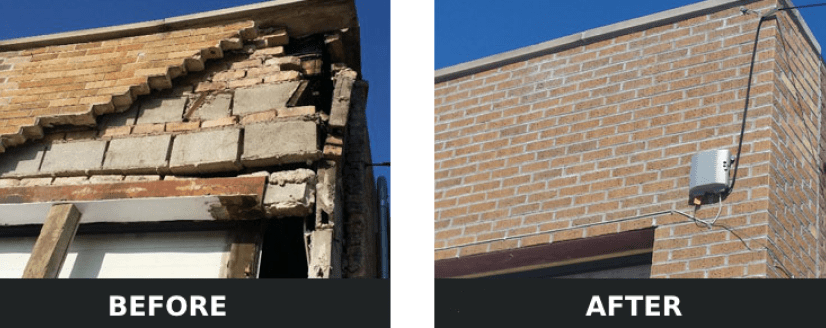
Service scopes can address deteriorated mortar, spalled brick, corroded lintels, parapet and coping defects, stone deterioration, split-face block, sealant failure, and water entry. The assessment should connect each visible condition to a likely cause, the evaluation required, and a compatible repair.
Select the Repair After Identifying the Failure
Commercial Masonry Repair Services in Glenview
Tuckpointing and Mortar Joint Repair
Brick Repair and Replacement
Lintel, Parapet, and Stone Restoration
Split-Face Block Repair and Water Intrusion
Recognize Conditions That Need a Closer Assessment
- Crumbling, recessed, cracked, or missing mortar
- Spalled brick or stone with flaking or detached faces
- Stair-step or horizontal cracking near windows and doors
- Displaced brick, bowing walls, or leaning parapets
- Open coping joints or loose overhead masonry
- Recurring efflorescence or interior moisture staining
- Failed sealant at windows, control joints, and material transitions
- Rust staining or visible corrosion near steel-supported openings
Give Property Managers and Boards a Procurement-Ready Scope
- The elevations and building components included
- Observed defects and proposed repair categories
- Mortar, brick, block, stone, sealant, flashing, or steel requirements
- Access equipment, staging, containment, and property protection
- Permit, inspection, and design-professional responsibilities
- Quantities, allowances, exclusions, and change-order procedures
- Work sequence, resident or tenant impacts, and closeout documents
Coordinate Related Work Around Shared Access
Phase Repairs Around Reserve Budgets and Occupancy
Move from Site Assessment to Closeout
1. Document Existing Conditions
Record affected elevations, crack patterns, mortar deterioration, damaged units, sealant failure, efflorescence, coping conditions, and visible distress near lintels or parapets. Review prior repairs, drawings, leak history, and available consultant reports.
2. Separate Repair Priorities
Distinguish possible safety or structural conditions from active water-entry repairs, cyclical maintenance, and appearance work. Identify areas that require further investigation before quantities or methods can be finalized.
3. Define Materials, Access, and Protection
State the material-matching requirements, access method, staging areas, dust controls, pedestrian routing, temporary closures, and protection of adjacent roofs, windows, landscaping, vehicles, and building systems.
4. Execute Work in Controlled Zones
Phase mortar removal, masonry replacement, steel or flashing work, sealant restoration, and related repairs by elevation or operational area. Keep the owner or manager informed when concealed conditions require a scope decision.
5. Review the Completed Scope
Compare completed work with the approved proposal, record authorized changes, and provide relevant closeout information to the property representative.
Confirm Glenview Permits Before Construction
Commercial Tuckpointing FAQs
Repointing removes deteriorated mortar and installs compatible replacement mortar. Traditional tuckpointing is a decorative finish that creates a narrow contrasting line within the joint. Because the terms are often used interchangeably, a commercial proposal should describe the actual removal depth, material, installation, and finish instead of relying on the service name alone.
Cracks near openings, horizontal displacement, visible corrosion, bowing, leaning parapets, or loose overhead units may involve support steel, movement, anchors, or other structural components. These conditions should be evaluated before repointing. A qualified design professional may be needed when stability or load support is involved.
Not by itself. Water may enter through block, mortar joints, sealant, flashing, coping, or drainage defects. Damaged components should be repaired first. A compatible breathable treatment may be considered only after the wall system and moisture path have been assessed.
Glenview identifies substantial masonry replacement, reconstruction, facade conversion, and commercial exterior alterations as permit-relevant. Minor repointing should be confirmed with the Village. Requirements depend on the exact scope, so contact the Development Center before construction begins.
Many projects can be phased by elevation or work zone, subject to structural conditions, access, noise, dust, entrances, parking, and overhead protection. The proposal should state closures, routing, resident or tenant notices, and how active work zones will move.
Key variables include building height, access, affected area, mortar condition, brick or stone replacement, lintel or parapet work, flashing and sealant repairs, containment, permits, professional design, and operational phasing. A site assessment is the appropriate basis for written quantities and allowances.
Share the property type and number of stories, affected elevations, visible symptoms, leak history, prior repairs, drawings or consultant reports, access constraints, target budget cycle, and the person authorized to coordinate site access and scope decisions.
Request a Commercial Masonry Repair Quote
Contact Us
To schedule a consultation or request a quote, please click here to contact us: